
Maintaining a multi-channel content strategy across LinkedIn, X (formerly Twitter), Meta, and newsletter platforms requires significant operational bandwidth. For growth teams, publishing a single long-form blog post or video essay is only twenty percent of the workflow—the remaining eighty percent involves manually adapting tone, formatting, character limits, and visual assets for each destination channel.
By pairing Zapier Interfaces as a centralized content control center with Claude 3.5 Sonnet and automated publishing schedulers like Buffer or Hootsuite, marketing teams can build a semi-automated repurposing engine. This system accepts long-form text or video transcripts, generates platform-native drafts, enforces custom brand voice guidelines, and routes drafted posts to human editors for one-click approval before queuing.
In this technical guide, we break down the step-by-step architecture required to build a human-in-the-loop social media content repurposing pipeline from scratch.
System Architecture: Human-in-the-Loop Content Repurposing
The system utilizes an asynchronous, event-driven design featuring an intermediate human approval gate to ensure brand quality control.
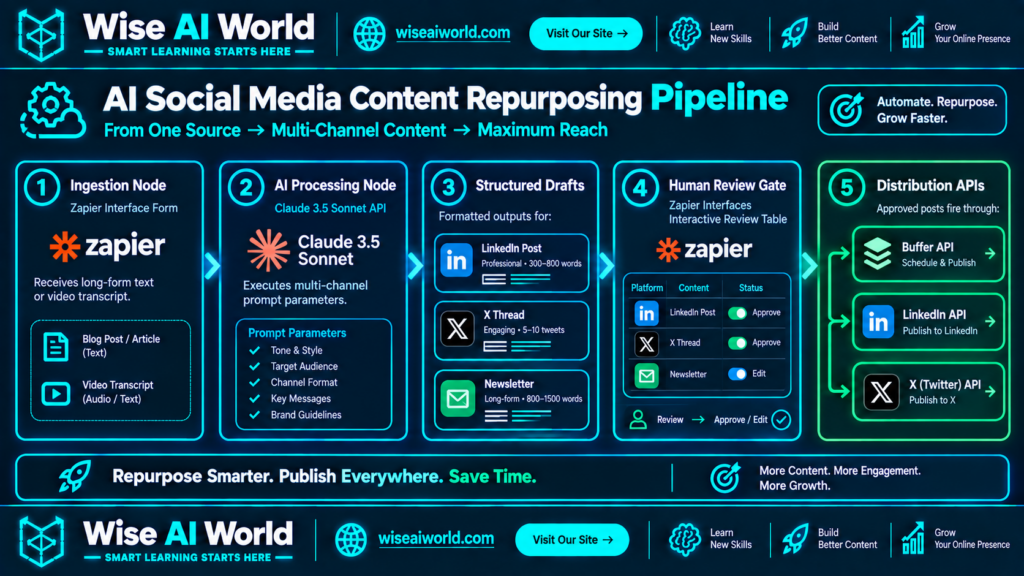
Pipeline Execution Flow
- Content Ingestion: The content editor pastes a blog URL, raw markdown text, or YouTube transcript into a custom submission form built inside Zapier Interfaces.
- AI Multi-Prompt Execution: Zapier triggers a multi-step Anthropic Claude node configured with specific brand voice parameters and platform constraints.
- Structured Draft Output: The AI model returns three distinct assets: a professional LinkedIn text post with key bullet points, a 5-post X (Twitter) thread with hook phrasing, and a short-form newsletter summary.
- Interactive Human Approval Gate: Generated drafts populate a Zapier Interfaces Table view. A content manager reviews, edits inline if necessary, and toggles the record status to “Approved”.
- Automated Distribution: Setting status to “Approved” fires the final webhooks, queuing posts directly into Buffer or posting natively via platform APIs.
Step 1: Building the Zapier Interface Ingestion Form
To establish a clean input workflow for your marketing team, configure an input form inside Zapier Interfaces that collects source content and operational metadata.
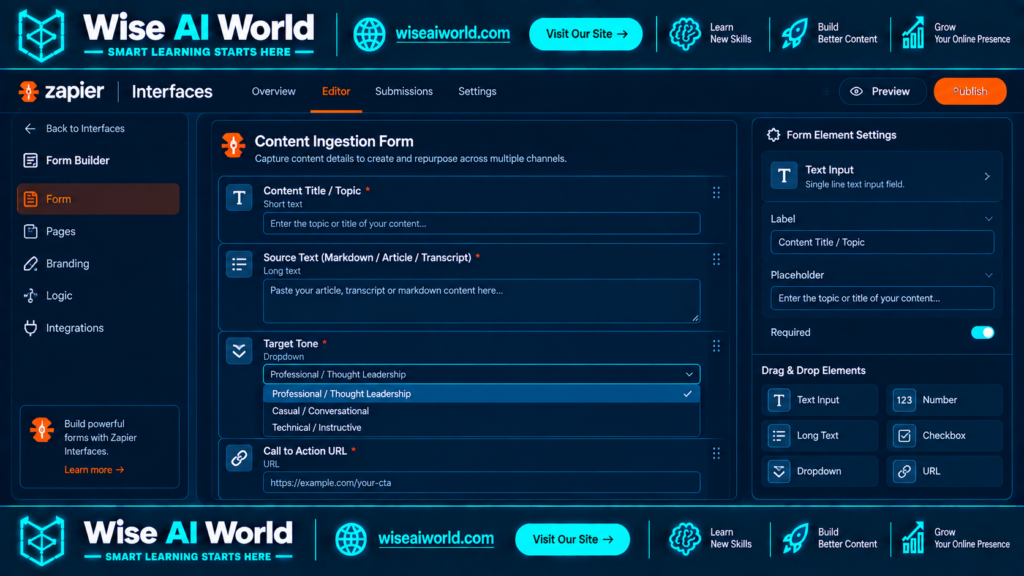
Required Form Fields
content_title(Short Text Input) – Primary title or topic name.source_text(Long Text Area) – Complete markdown draft, article text, or video transcript.target_tone(Dropdown Menu) – Parameters: Professional/Thought Leadership, Casual/Conversational, Technical/Instructive.call_to_action_url(URL Input) – Destination link for lead magnet or original article.
Step 2: Configuring Claude 3.5 Sonnet Prompt Architecture
Generic prompts yield generic social media posts. To maintain brand authority, pass your content through a structured prompt system enforcing channel-specific constraints, character caps, and formatting conventions.
System Prompt Configuration
You are an elite Content Marketing Lead specializing in B2B tech brand voice adaptation.

YOUR TASK:
Take the provided long-form source text and repurpose it into 2 distinct channel assets:
1. LINKEDIN POST: Focused on high-level operational takeaways. Use clear spacing, short paragraphs (max 2 sentences per paragraph), no hashtags, and a compelling opening hook.
2. X THREAD (3-5 Tweets): The first tweet must act as an engaging hook statement without clickbait. Subsequent tweets break down actionable insights. Output tweets separated by "[NEXT_TWEET]".

STRICT RULES:
- Do not use corporate jargon (e.g., "game-changer", "delve", "paradigm shift").
- Match the selected target tone provided in the variable input.
- Return output strictly formatted according to the requested JSON structure.
Enforced JSON Schema Prompt Output
{
  "type": "object",
  "properties": {
    "linkedin_draft": {
      "type": "string",
      "description": "Formatted long-form text optimized for LinkedIn engagement."
    },
    "x_thread_array": {
      "type": "array",
      "items": { "type": "string" },
      "description": "Array of individual tweets forming an ordered thread."
    },
    "core_takeaways_summary": {
      "type": "string",
      "description": "2-sentence executive summary for newsletter inclusion."
    }
  },
  "required": ["linkedin_draft", "x_thread_array", "core_takeaways_summary"],
  "additionalProperties": false
}
Step 3: Setting Up the Human-in-the-Loop Review Dashboard
Automating content publishing end-to-end without human oversight risks brand missteps or formatting errors. Zapier Interfaces solves this by providing a unified review table where human editors retain full editorial control prior to API distribution.
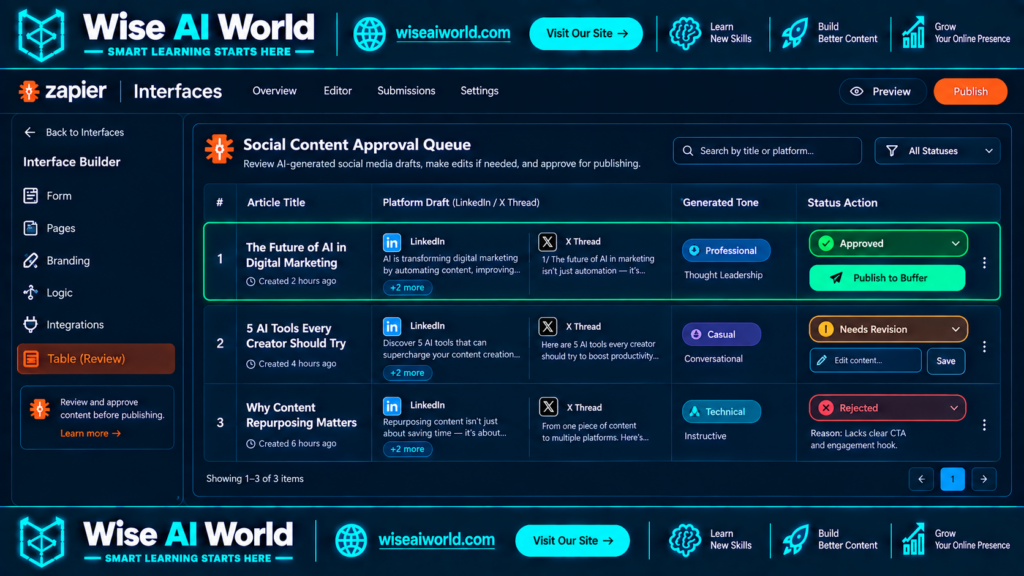
Approval Matrix Logic
| Status Trigger | Editorial Action | Downstream Automated Task |
|---|---|---|
| Approved | Editor approves copy without further changes. | Triggers Buffer Zap to queue LinkedIn post and dispatch X thread payload directly via Twitter API. |
| Needs Revision | Editor makes manual inline edits in table cell. | Updates record in Zapier Interfaces Table; waits for final “Approved” status toggle. |
| Rejected | Draft discarded due to poor source fit. | Archive record; cancel all scheduled webhook triggers. |
Cost & Operational Efficiency Benchmark
Replacing manual social copywriting with an AI-assisted Zapier workflow drastically increases publishing volume while lowering production overhead.
| Operational Metric | Manual Content Marketing Team | Basic AI Copy Tool (Copy-Paste) | Zapier + AI Engine (This Pipeline) |
|---|---|---|---|
| Repurposing Time / Article | 90 to 120 Minutes | 25 to 40 Minutes | 3 to 5 Minutes (Review Only) |
| Multi-Channel Consistency | Variable (Depends on writer) | Inconsistent (Manual formatting) | High (Strict Schema Enforcement) |
| Monthly Operational Cost | ~$3,500 (Agency/Freelancer retainer) | ~$150 (SaaS licenses + time) | ~$29 (Zapier Pro + OpenAI/Claude API) |
Summary & Implementation Roadmap
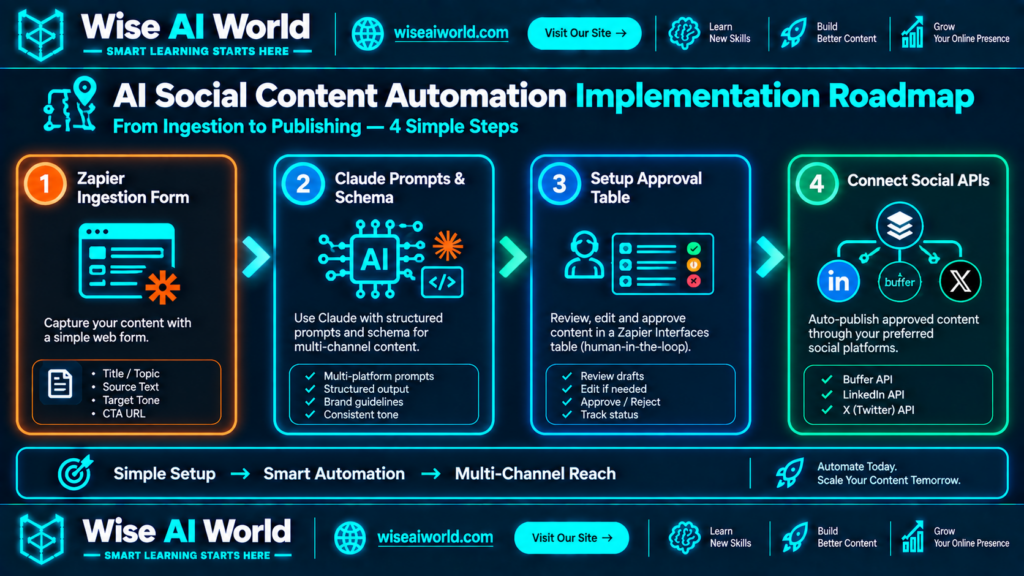
Key Execution Checklist:
- Standardize Ingestion: Use custom forms inside Zapier Interfaces to ensure inputs like tone and URLs are captured uniformly.
- Enforce JSON Schema: Mandate structured JSON outputs from Claude to guarantee individual social assets map cleanly into distinct database fields.
- Protect Brand Voice: Never publish raw AI outputs directly to social APIs; always implement an human approval gate.

Manish Prakash Dubey is an AI educator and technology writer based in India. He founded WiseAIWorld to make artificial intelligence simple and practical for students, professionals, and beginners. His work focuses on AI basics, machine learning, deep learning, NLP, computer vision, and real-world AI tools.
